Toronto homeowners are no strangers to the architectural beauty and structural challenges that come with living in the GTA. From the historic Victorians of Cabbagetown to the modern builds in North York, our doors are the first line of defense against the city’s notorious humidity, freezing winters, and high-traffic urban living. Whether it’s a door that won’t latch due to seasonal swelling or a dent from a recent move, a compromised entryway affects your home’s security, insulation, and curb appeal.
While some damage looks daunting, many common issues can be handled with the right approach. This guide is designed to empower you with the knowledge to repair a damaged door in Toronto, helping you maintain a safe and energy-efficient home throughout the seasons.
Common Types of Door Damage in Toronto Homes
Before you can begin a repair, you must understand the specific forces acting on your entryway. Toronto’s unique environment plays a massive role in how doors deteriorate.
Weather-Related Damage
In the GTA, extreme temperature swings place constant stress on residential doors. As a result, high summer humidity often causes wooden doors to absorb moisture and swell, making them difficult to close. During winter months, however, dry, heated indoor air can lead to wood shrinking or warping.
Impact Damage
In a fast-paced urban environment, doors are frequently exposed to accidental impacts. For example, moving furniture into a condo can easily cause dents, punctures, or deep scratches. As a result, even minor impacts on hollow-core doors may create holes that compromise structural integrity.
Wear & Tear
Over time, general daily use inevitably takes its toll. In particular, heavy solid wood doors in older Toronto homes place immense pressure on hinges. As a result, homeowners often experience sagging, loose screws, and sticking issues.
Step-by-Step Guide to Repairing a Damaged Door
If you have decided to take the DIY route to repair a damaged door in Toronto, follow this systematic approach to ensure a professional-grade result.
Tools & Materials You’ll Need
Tools: Power drill, wood chisel, orbit sander (or sandpaper block), level, and a utility knife.
Materials: Two-part wood filler or auto body filler (for dents), 3-inch wood screws, wood glue, and matching paint or stain.
Safety Gear: Dust mask and safety glasses.
Repairing a Sticking or Swollen Door
If your door is sticking due to Toronto’s summer humidity:
First, identify the rub by looking for scuff marks on the door frame.
Tightening the top hinge is often the next step, as it can pull the door back into proper alignment.
If the issue continues, lightly plane or sand the sticking edge until smooth.
Fixing Holes or Dents in a Door
For impact damage on a hollow-core or solid door:
Clean the area: Remove any loose splinters or debris.
Fill the void: For large holes in hollow doors, stuff the area with expanding foam or paper first to create a “backing.”
Apply filler: Use a putty knife to apply wood filler. It is best to apply it in thin layers, allowing each to dry.
Sand flush: Once dry, sand the area with 120-grit sandpaper until it is perfectly level with the rest of the door surface.
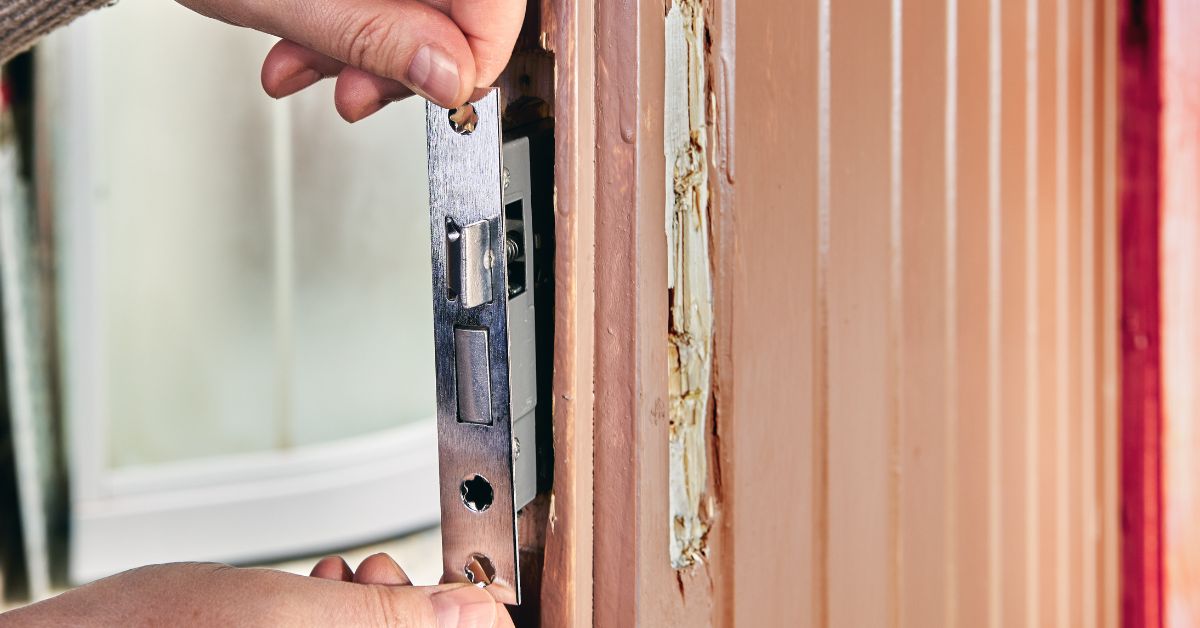
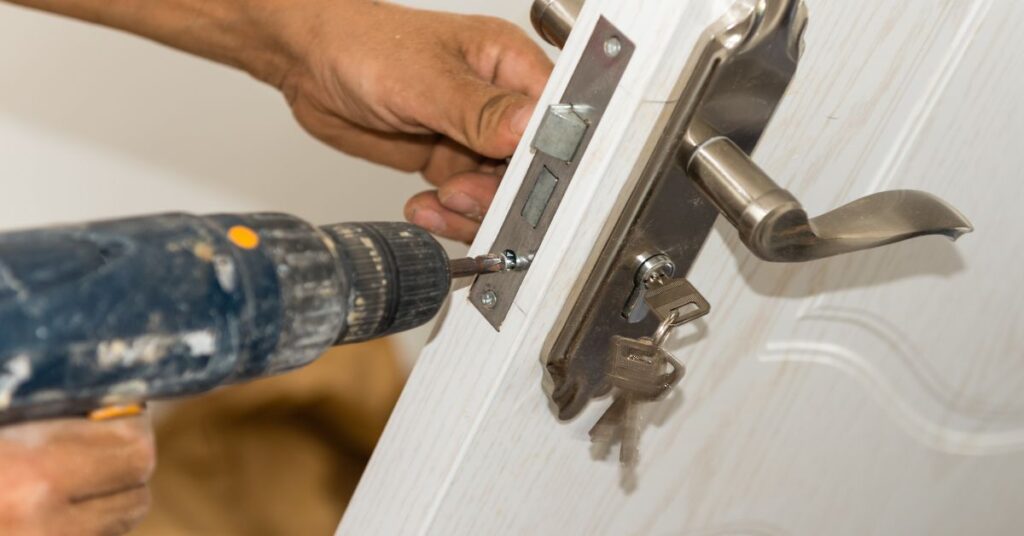
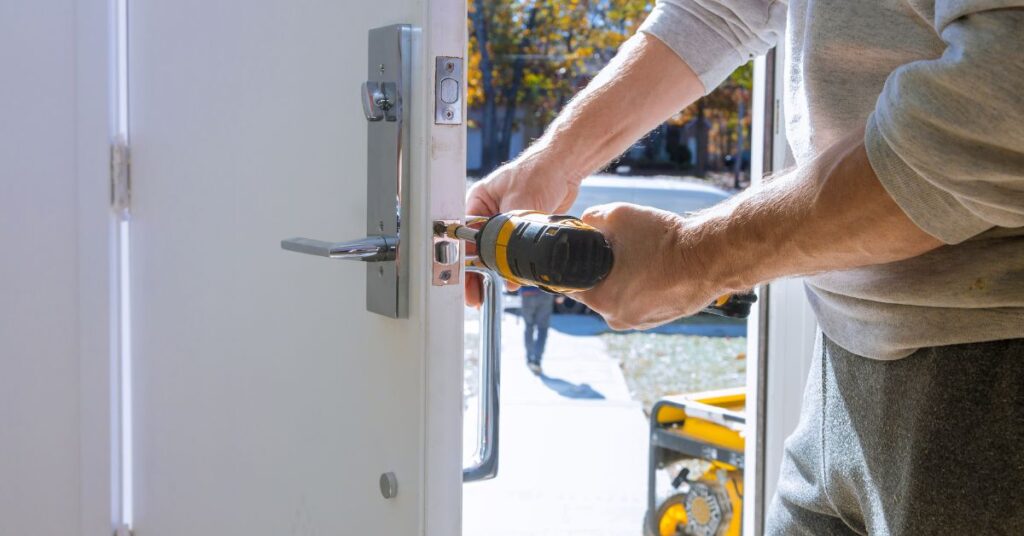
Replacing Damaged Hardware (Hinges, Handles)
If your hinges are squeaking or sagging:
Remove one screw at a time.
If the screw hole is stripped, dip a toothpick in wood glue, jam it into the hole, snap it off, and then re-drive the screw.
For heavy exterior doors, ensure at least one screw on each hinge is 3 inches long to anchor the door into the wall stud.
When to Call a Professional Door Repair Service in Toronto
However, while DIY fixes are effective for minor aesthetic issues, some situations still require a professional specialist.
Signs You Need Expert Help
Structural Frame Rot: If the door jamb itself is soft or crumbling, the structural integrity is gone.
Forced Entry Damage: If a door has been kicked in or pried, the internal frame is often split beyond a simple DIY fix.
Double-Pane Glass Failure: If your sliding door or garden door glass is fogged or cracked, it requires professional glazing services.
Benefits of Professional Repair for Complex Issues
Choosing a professional service like Door Repair Canada ensures that your door is not just “fixed” but restored to its original factory specifications. Professionals have access to commercial-grade hardware and specialized weather-stripping that isn’t always available at local hardware stores. Furthermore, a professional can diagnose if the “sticking” door is actually a symptom of a larger foundation or framing issue.
Conclusion
Overall, maintaining your entryways is an essential part of homeownership in the GTA. By doing so, learning how to repair a damaged door in Toronto helps extend fixture lifespan while keeping your home energy-efficient. Whether you are sanding down a swollen edge or filling a minor dent, taking action early prevents costly replacements down the road.
However, for major structural damage or security upgrades, don’t leave your safety to chance. Door Repair Canada offers expert, fast, and reliable services across Toronto and the surrounding areas.
Would you like a free quote on your door repair? Contact Door Repair Canada today and let our specialists restore your home’s security and style!