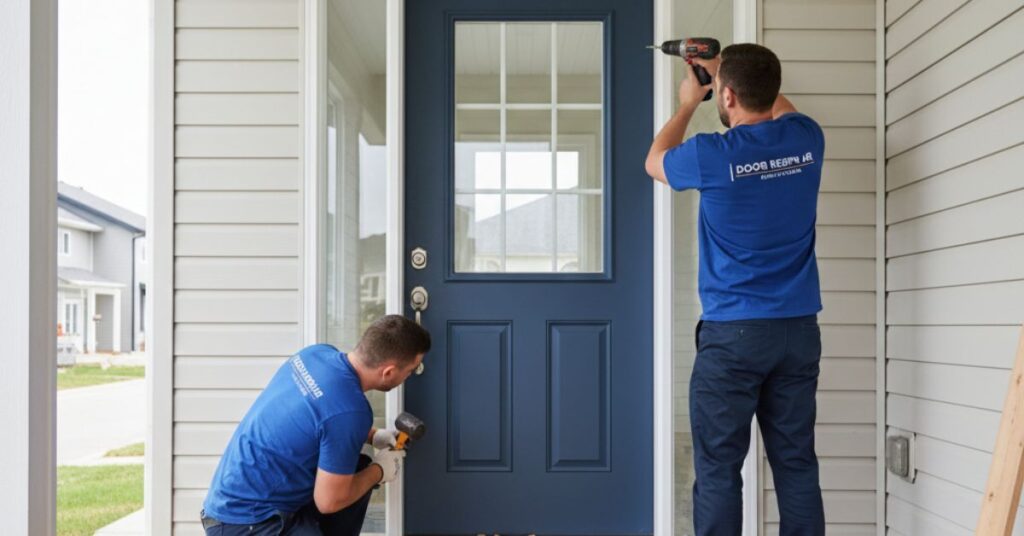
Your front door is more than just an entry point; it is a vital component of your home’s security, energy efficiency, and curb appeal. In Canada, our exterior doors endure significant stress, from the humid heat of summer to the bone-chilling freeze of winter. Over time, this constant expansion and contraction can lead to sticking, drafts, or structural damage.
While some issues require a professional touch, many common problems can be addressed with a little patience and the right tools. This guide from Door Repair Canada will walk you through the most effective ways to repair an exterior door and keep your home protected.
Essential Tools and Materials
Before you begin, gather the following items to ensure a smooth repair process:
Tools: Screwdriver (Phillips and flat-head), hammer, wood chisel, power drill, level, and a utility knife.
Materials: Extra-long wood screws (3-inch), wood glue, wood filler or epoxy, replacement weatherstripping, and medium-grit sandpaper.
Safety Gear: Work gloves and safety glasses.
Step 1: Diagnosing Common Door Issues
Before reaching for your toolbox, you must identify the root cause of the problem. Most exterior door issues fall into three categories:
1. The Door is Sticking or Sagging
If your door scrapes against the frame or requires a shoulder lean to close, it has likely sagged. This is often caused by loose hinges or a house settling over time.
2. Drafts and Energy Loss
Can you see light peeking through the edges of your door? If so, your weatherstripping has likely compressed or cracked, leading to higher heating bills during Canadian winters.
3. Surface Damage or Rot
Wooden doors are susceptible to moisture. Check the bottom corners of the door and the frame (jamb) for soft spots, which indicate wood rot.
Step 2: How to Fix a Sagging or Sticking Door
A sagging door is usually the result of the top hinge pulling away from the jamb.
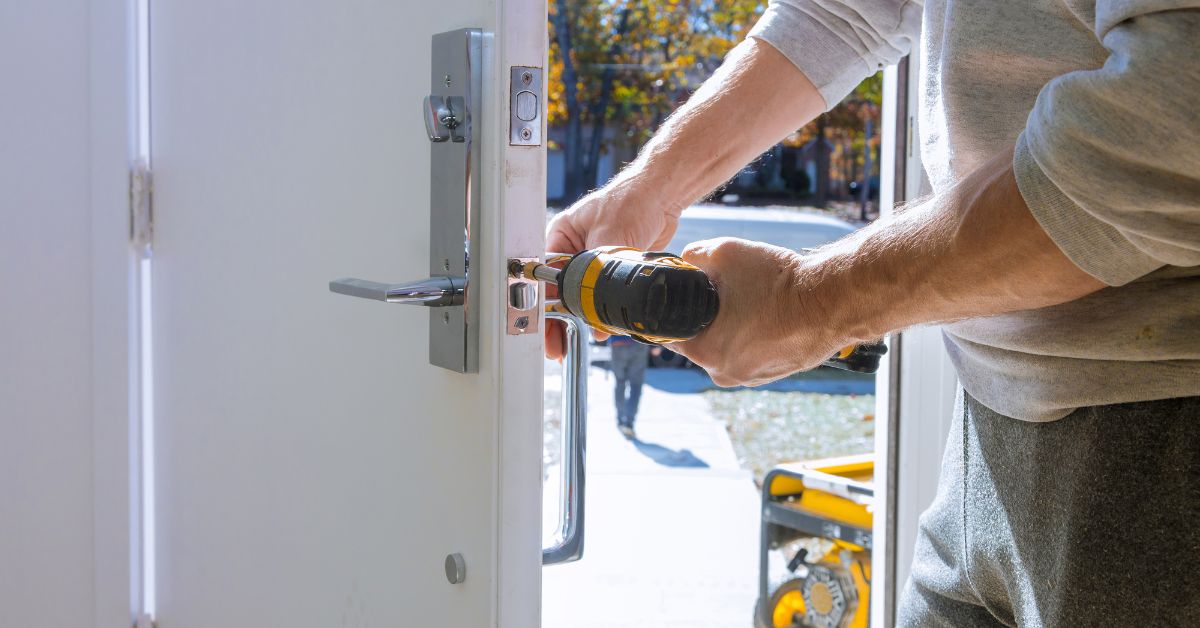
Tighten the Hinge Screws: Start simple. Use a screwdriver to tighten all screws on the door-side and frame-side of the hinges.
Replace Short Screws: If the screws just spin and won’t tighten, the holes are stripped. Replace the middle screw of the top hinge with a 3-inch wood screw. This will reach past the door jamb and anchor directly into the wall stud, pulling the door back into alignment.
Check for Square: Use a level to see if the door is hanging straight. If it still sticks at the top corner, you may need to lightly sand the edge of the door or shim the bottom hinge.
Safety Warning: Exterior doors are significantly heavier than interior doors. Always have a second person help you steady the door if you are removing hinge pins to prevent the door from falling and causing injury.
Step 3: Replacing Weatherstripping and Seals
To repair an exterior door’s energy efficiency, you must maintain a tight seal.
Remove Old Seals: Use a utility knife or pliers to pull away cracked or flattened weatherstripping.
Clean the Channel: Wipe down the door stop to remove any dirt or adhesive residue.
Install New Stripping: Measure and cut your new weatherstripping (V-strip or foam) to fit. Press it firmly into the groove or peel-and-stick it along the frame.
Adjust the Threshold: Most Canadian door sills have adjustment screws. Turn them counter-clockwise to raise the threshold until it makes a snug contact with the “sweep” at the bottom of the door.
Step 4: Repairing Minor Wood Rot
In our climate, moisture can get trapped at the base of the door frame.
Scrape Away the Damage: Use a chisel to remove any soft, punky wood. You must reach solid, dry wood for the repair to hold.
Apply Wood Hardener: If the area is slightly damp, apply a liquid wood hardener to solidify the remaining fibers.
Fill the Gap: Use a high-quality wood filler or a two-part epoxy. Overfill the hole slightly, as some shrinkage may occur.
Sand and Paint: Once cured, sand the area flush with the frame. Prime and paint immediately to seal out future moisture.
Expert Tips for a Professional Finish
Lubricate the Hardware: While repairing the door, spray a dry graphite lubricant into the keyway and apply a little lithium grease to the hinge pins to prevent squeaking.
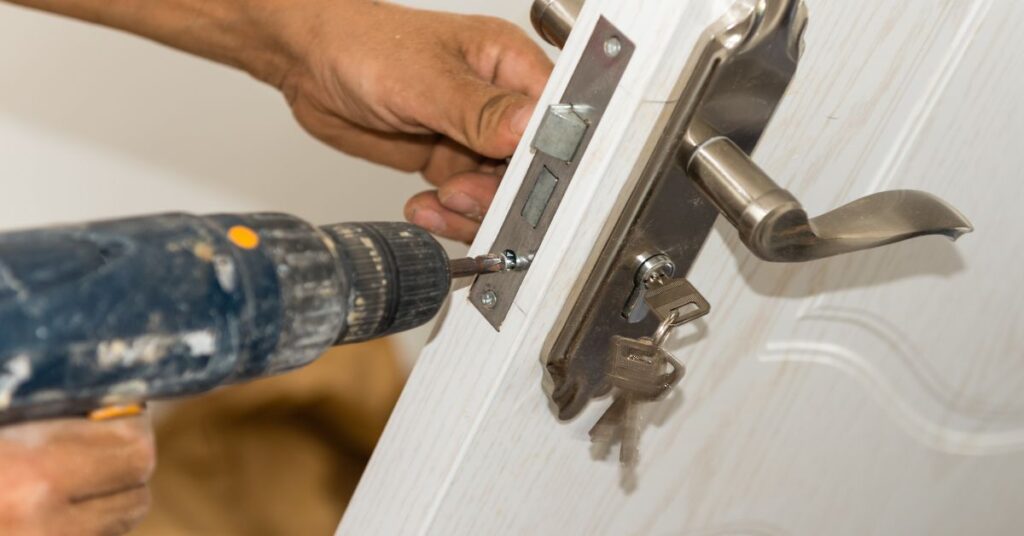
Check the Strike Plate: If the door closes but doesn’t latch, your strike plate is misaligned. You can often fix this by slightly enlarging the hole in the plate with a metal file.
Mind the Temperature: If you are painting or using wood filler, try to work on a day that is at least 10°C to ensure materials cure properly.
Conclusion and Ongoing Maintenance
Knowing how to repair an exterior door can save you hundreds of dollars in utility costs and replacement fees. However, the best repair is prevention. We recommend inspecting your door twice a year—once in the spring and once in the autumn. Look for peeling paint, thinning weatherstripping, or any changes in how the door swings.
By catching small issues early, you ensure your home remains secure and comfortable regardless of the Canadian weather. If you find that your door frame is severely warped or the structural integrity is compromised, it may be time for a professional replacement.